Breaker Keeps Tripping or Outlets Went Dead? What to Check First
Some trips are harmless and some are a warning, and a few safe checks will tell you which one you've got.
October 6, 2026 · 4 min read
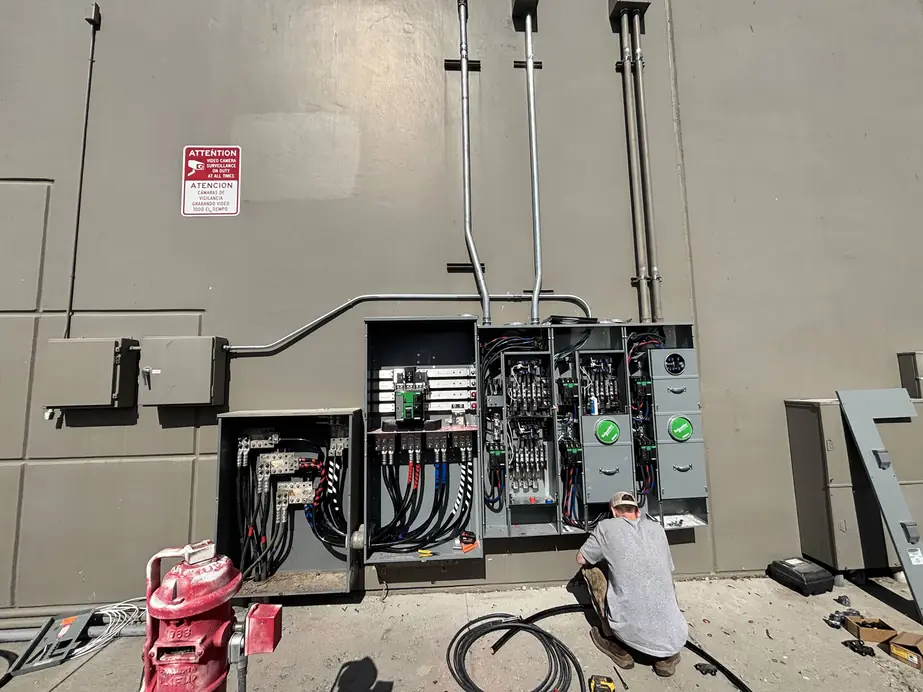
A breaker that trips once and never again is usually just doing its job. A breaker that trips every time you run the microwave, or a row of outlets that quit overnight, is asking for attention. Here's what you can safely check from the floor, what to leave alone, and when a phone call makes more sense than another trip to the panel.
What a tripped breaker is telling you
A breaker is a safety switch. It cuts power when too much current flows through a circuit. That happens for three basic reasons. The circuit is overloaded, meaning too many things are pulling power at once. There's a short, where a hot wire touches something it shouldn't. Or there's a ground fault, where current leaks somewhere it doesn't belong, often because of moisture or a damaged cord.
An overload is the friendly one. Space heater plus hair dryer on the same circuit, you hear a click, and the lights go out. A short or a ground fault is the one you shouldn't shrug off, because the breaker is stopping something that could heat up the wiring inside your walls.
Safe checks you can do from the floor
Start with what you can see and touch without opening anything.
- Unplug everything on the dead circuit. Space heaters, window units, power strips, phone chargers, all of it. Then reset the breaker and see if it holds.
- Reset it the right way. A tripped breaker often rests in the middle position, so pushing it straight to ON does nothing. Push the handle firmly to OFF first, then to ON. If your panel has a hinged door, that's fine to open. If the cover is held on with screws, it stays on.
- Look for the obvious. A cord with a cracked jacket, a plug that's warm to the touch, a lamp that flickers when you nudge it.
- Find the GFCI outlets. Bathrooms, kitchens, garages and outdoor outlets often have them, and one GFCI can protect other outlets down the line, including ones in a different room. Press the RESET button on the GFCI and see if power comes back.
- Test the dead outlet with a lamp you know works, so you're not blaming the outlet for a dead bulb.
- Add the load back one item at a time. If the breaker trips the moment a certain appliance turns on, that appliance or its cord is your suspect.
If power comes back and stays back, you probably had an overload or a tired appliance. Keep an eye on it for a few days.
Things to leave alone
Never remove a panel cover or touch anything inside the panel. Never poke at bare wires, and never hold a breaker in the ON position or tape it down so it quits tripping. A breaker that won't stay on is protecting you. Overriding it is how a nuisance turns into a fire. The same goes for swapping in a bigger breaker. The wire in the wall was sized for the breaker that's there, and a bigger breaker won't make the wire any bigger.
Signs to stop and call
Some symptoms mean the problem is past what a homeowner should chase.
- The breaker trips again right away, even after you've unplugged everything.
- A breaker, outlet, or cover plate feels hot or looks discolored.
- You smell burning plastic, or you hear buzzing or crackling from an outlet or the panel.
- Lights dim or flicker when a big appliance starts.
- Several outlets stopped working and none of them is a GFCI, with no tripped breaker anywhere to blame.
That last one is more common than people expect. A loose connection somewhere upstream can kill a set of outlets without tripping anything. Finding it means tracing the circuit with the right tools, and that's what a troubleshooting call is for.
What a service call costs
Thunder Electric publishes its service call price: $65 per 30 minutes, with a one hour minimum. A service call usually means troubleshooting, a repair, or a small job like changing out a light. Any time past the first hour is billed in half-hour intervals.
Nobody collects payment at your door. The invoice comes by mail and email, usually within one to two weeks after the work is done. If you want to know whether the fix will be small or large, the technician can usually tell you once they've seen the circuit, before the big decisions get made.
If you're standing in a dark kitchen with a breaker that keeps dropping, call the office at (509) 575-8362. Office hours are Monday through Friday, 8 to 5. If it's a real emergency outside those hours, the 24/7 emergency line will connect you with the on-call tech, so don't wait out a burning smell until Monday.
Thunder Electric, (509) 575-8362
Call (509) 575-8362More articles
Signs Your Electrical Panel May Need Replacing, and Why a Second Opinion Pays
A panel replacement is a big number, so make sure the problem really is the panel.
Standby Power for Yakima Valley Homes: Interlock, Transfer System, or Battery Hookup
The right backup power setup depends on who's home, what has to keep running, and how much you want to do by hand.